
Dreamweaving Garden
Pogo Hopper GamesSimulation
4.3144.00 Reviews
- Version
- 1.3.51
- Installs
- 50.00K
- Age Rating
- Teen
Screenshots

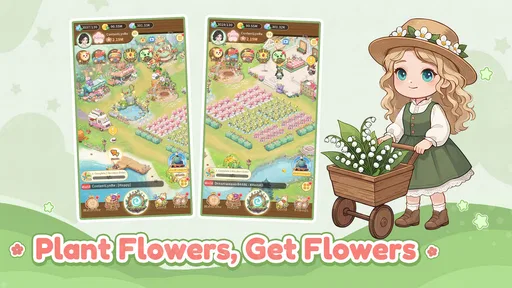

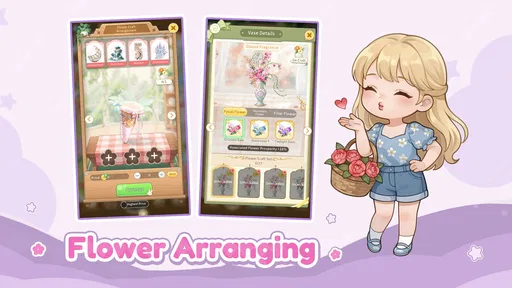

Our Review of Dreamweaving Garden
 Analysis by Appyee
I went into Dreamweaving Garden expecting a quiet simulation game built around flowers, and that is exactly the mood it creates. Its simple premise gives it an unusually focused identity: instead of asking me to manage a sprawling city, run a business, or survive a crisis, it keeps attention on a garden and the small choices that make it feel personal. That narrow focus is its main appeal, but it also means the game will not suit anyone looking for constant action or a deep management spreadsheet.
Developed by Pogo Hopper Games, this free simulation game is aimed at Teen players and runs on Android devices using version 6.0 or later. The current version is 1.3.51, and the game has reached over 50 thousand installs. Its average score sits at 4.3 from more than 600 ratings, with over 100 written reviews, which gives a useful impression of a game that has found a modest but interested audience rather than trying to compete through sheer scale.
How the garden gives me reasons to keep playing
I find the best way to judge a garden game is to notice what draws me back after the first visit. In this section, I look at how small goals and visible change can make a return feel worthwhile, while keeping the experience a choice rather than another daily obligation.
The first goals feel approachable
The strongest early quality is how easy it is to understand what I am supposed to care about. The “Just Flowers, and You” idea is not buried under a complicated premise. I can settle into the garden, look at what is available, and make progress without first learning a long chain of rules. That makes the opening especially comfortable for short sessions, including the kind of play I might fit in while waiting for an appointment or winding down before bed.
What matters in the opening is not an overwhelming list of objectives, but the feeling that each small action contributes to a more complete garden. The game’s dreamlike framing also helps separate it from practical gardening simulators. I am not approaching it as a realistic horticulture lesson. I am approaching it as a gentle space where arranging and developing flowers is the central activity.
That distinction is important when deciding whether to install it. If I want a simulation that teaches real planting schedules, weather management, soil conditions, or detailed economics, this is probably the wrong direction. If I want a low-pressure garden theme with a more imaginative tone, the concept is much easier to appreciate.
Progress is easier to notice than to calculate
One of the useful design choices in a flower-focused game is that progress can be visual. A garden that looks more developed gives me an immediate signal that my time has produced something. I do not need to remember a complicated table of production figures to feel that the space has changed. This visual feedback is also why the game works better for relaxed players than for people who need every decision to produce a precisely optimized result.
I found that this kind of progress encourages me to pause and inspect the result rather than rush through a checklist. The garden becomes a record of my attention. That is a different reward from the constant numerical escalation found in many management games, where the main satisfaction comes from seeing income, population, or power rise. Here, the emotional payoff is tied more closely to the appearance and atmosphere of the space.
There is a practical tip hidden in that approach: I would avoid treating every early choice as permanent optimization. I get more from the game when I first use the opening stretch to understand what kind of garden I enjoy looking at. A neat, carefully arranged space and a more varied, organic one can both be satisfying, but the best choice depends on whether I am playing for order, creativity, or simple relaxation.
Unlocks need to support the mood
In a game like this, unlocks have an unusual responsibility. They should give me a reason to return without making the garden feel like a chore list. The most convincing progression is the kind that expands what I can imagine doing, not merely what I must collect next. New possibilities are valuable when they let me shape the garden in a more personal way.
This is also where expectations should remain realistic. Dreamweaving Garden is not the kind of simulation I would choose if I wanted a huge technology tree or a dense chain of interlocking systems. Its appeal comes from a smaller loop: spend time in the garden, notice development, and decide what to work toward next. Players who enjoy compact goals may find that satisfying, while players who measure depth by the number of menus and upgrade branches may find it restrained.
I recommend approaching each unlock as a creative prompt rather than a compulsory milestone. Instead of asking only how quickly I can reach the next reward, I would ask what new arrangement or visual idea the reward makes possible. That mindset helps the progression feel less like a race and more like a series of invitations to reshape the garden.
The challenge curve is gentle by design
The game’s challenge is not the same as difficulty in a combat or puzzle title. The pressure comes from deciding how much attention I want to give the garden and how patiently I am willing to develop it. That makes the experience welcoming, but it can also leave it feeling too soft for anyone who needs frequent failure, tight timing, or high-stakes decisions.
I see this as a deliberate trade-off rather than a flaw by itself. A calm simulation can be more useful than a demanding one when I want something that does not compete with the rest of my day. I can play for a short period, put it down, and return later without feeling that I have abandoned a difficult challenge. The downside is that the sense of urgency may be limited, especially after the novelty of the garden has settled.
For me, the pacing works best when I create my own small targets. I might focus on improving one area, making the overall arrangement feel more coherent, or returning only when I have enough time to enjoy the visual result. This self-directed approach is a strength for reflective players, but it is not a substitute for structured challenge if that is what normally keeps someone engaged.
Where retention can feel helpful or demanding
Free games often have to balance a pleasant core loop with reasons to come back. Dreamweaving Garden’s retention appeal comes naturally from wanting to see the garden develop, but that can become less compelling if I am not personally invested in arranging flowers. The game is at its best when returning feels like revisiting a place I am building, not reporting for a daily obligation.
That is why I would be cautious about turning it into a routine too quickly. If I force myself to check in merely because I feel I should, the peaceful tone can start to feel like pressure. A healthier way to use it is to let the garden support my schedule rather than dictate it. I can treat it as a short creative break, not another task competing for attention.
There is also a financial consideration. The game is free to start, while optional purchases range from $0.49 to $99.99 per item. That broad range means I would be especially careful before spending. I would first decide whether the basic garden loop genuinely holds my interest, then set a personal limit rather than buying impulsively to speed up progress or chase a particular unlock.
This matters for younger players as well. The Teen age rating does not replace sensible purchase controls. If the device is shared, I would check the purchase settings before handing it over, particularly because the available item prices cover both very small and very large amounts. The game is easier to enjoy when spending remains a conscious choice instead of becoming part of the normal rhythm of play.
A realistic everyday use case
I can see myself opening it after work when I want something more engaging than scrolling but less demanding than a competitive game. I might spend a few minutes looking over the garden, make one or two changes, and close the app once the space feels a little more complete. On another day, I might have more time and use the same session to rethink the arrangement from the ground up.
That flexibility is one of its clearest strengths. It does not require me to be in a particular mood for action. The same flower-centered setting can support a quick visit or a longer, more deliberate session. The trade-off is that a player who wants a strong “one more round” hook may not receive the same immediate pull they would get from a puzzle, idle economy, or competitive simulation.
I would also recommend it to people who like taking screenshots or simply enjoy watching a space become more expressive over time, although I would not install it expecting a full decorating sandbox unless that is clearly what I want from the experience. Its identity is more focused than a general-purpose home-design game, and that focus is what gives it atmosphere.
How it compares with familiar simulation alternatives
Compared with a city-building simulation, this game feels much less concerned with expansion, logistics, and balancing multiple public needs. I do not come to it for traffic problems, budgets, or large-scale planning. That makes it easier to pick up, but it also removes the complex chain reactions that make a city builder absorbing for strategy-minded players.
Compared with a farming simulation, the flower theme gives it a softer and more specialized identity. Farming games often divide attention between crops, characters, exploration, crafting, and schedules. Dreamweaving Garden is a better choice when I want the garden itself to remain the center of attention. The compromise is less variety for players who enjoy a broad life-simulation package.
Compared with idle garden games, it appears more suitable for someone who wants to feel involved in the space rather than simply watch values increase. Idle alternatives can be better when I want passive progress and frequent numerical rewards. This game is more appealing when I want my attention to matter, even if the resulting pace is slower and less aggressively rewarding.
Finally, compared with competitive simulation games, it offers a clear escape from rankings and performance pressure. That is excellent for a quiet evening, but not ideal if my main motivation is beating another player, chasing a leaderboard, or mastering a demanding system. Knowing which of these moods I am in will determine whether the game feels calming or underpowered.
Who should try it, and who should skip it
I would recommend Dreamweaving Garden to players who enjoy flower themes, gentle progression, visual improvement, and games that can be played in short, self-directed sessions. It is also a sensible option for someone who wants a simulation game that does not immediately demand expert planning. The free entry point makes it easy to test the atmosphere before deciding whether it deserves a regular place on the phone.
I would skip it if I need a clearly defined campaign, a steep difficulty curve, or constant mechanical variety. Players who dislike waiting for a space to develop may lose interest, as may anyone who sees customization as secondary to action. I would also avoid spending until the basic loop has proved enjoyable; optional purchases cannot fix a mismatch between the game’s calm pace and a player’s preferred style.
My verdict on the progression and staying power
My overall impression is that the progression works because it stays aligned with the garden fantasy. Early goals are approachable, visual development gives progress a tangible shape, and the gentler challenge curve protects the game’s relaxing character. The same choices limit its appeal for people who need pressure, complexity, or a rapid stream of dramatic rewards.
The most important question is not whether the game can provide endless intensity, but whether its atmosphere gives me a reason to return. For me, it succeeds when I treat it as a personal creative retreat rather than a demanding management test. I would open it when I want to make a little progress, enjoy a flower-centered space, and leave feeling that the session was restful rather than exhausting.
Dreamweaving Garden is worth trying for its focused, peaceful approach to simulation. It is free, accessible on older Android devices, and specific enough to stand apart from broader farming and city-building alternatives. I would keep expectations centered on gentle garden development, watch spending carefully, and judge it by the quality of its mood rather than by how many systems it can stack on top of the flowers.
Verdict
Strengths of Dreamweaving Garden
- Calming visuals and gentle pacing make it ideal for short relaxation sessions.
- Simple controls are easy to learn, even for players unfamiliar with puzzle games.
- Creative garden themes provide a pleasant sense of personal progression.
- Works well as a low-pressure game without demanding fast reactions.
- Atmospheric presentation creates a soothing experience before bedtime.
Limitations of Dreamweaving Garden
- Progress may feel slow for players who prefer constant action or challenge.
- Some decorative options can take time to unlock through regular play.
- The relaxing pace may become repetitive during longer sessions.
- Small visual details may be harder to notice on compact phone screens.
- Players seeking competitive features may find the experience too solitary.
Similar Picks in This Category
View All
Truckers of Europe 3
Wanda Software4.3

Town Building Life Simulator
XGame Global4.2

Fidget Toys Trading・Pop It 3D
Freeplay Inc4.7

Sculpt People
CrazyLabs LTD4.4

Scary Teacher 3D
Z & K Games4.2

Hair Tattoo: Barber Shop Game
CASUAL AZUR GAMES4.3
Frequently Asked Questions
What is Dreamweaving Garden?
Dreamweaving Garden is a relaxing, creativity-focused mobile experience built around designing and caring for a dreamlike garden. Players can arrange plants, decorations, and other visual elements while gradually developing their personal space. The app is aimed at users who enjoy calm gameplay, gentle progression, and customization rather than fast action, difficult competition, or highly demanding challenges.
Is Dreamweaving Garden free to download and play?
Dreamweaving Garden can generally be downloaded for free, allowing users to try its main features without an upfront purchase. However, some optional items, resources, cosmetic decorations, or progression-related benefits may be offered through in-app purchases. Before downloading, it is worth checking the store listing and your device’s purchase settings, especially if children may use the application.
Does Dreamweaving Garden require an internet connection?
The basic garden experience may be available without a constant internet connection, which makes it suitable for relaxing during travel or in places with limited connectivity. Nevertheless, certain features can depend on online access, including updates, advertisements, cloud synchronization, special events, account services, or purchases. Availability may also vary according to the version installed on your Android or iOS device.
Is Dreamweaving Garden suitable for children?
Dreamweaving Garden’s peaceful presentation and non-violent gameplay may make it appealing to younger players, but parents should still review the app’s age rating and privacy information before installation. If the game includes advertisements, social functions, or in-app purchases, parental controls are recommended. The suitability can also depend on how much reading, patience, and independent decision-making the child is comfortable with.
What devices are compatible with Dreamweaving Garden?
Compatibility depends on the operating system version, available storage, and the specific release published for Android or iOS. Before downloading, check the official store page for the latest requirements and supported devices. Older phones and tablets may install the app but provide a less comfortable experience if they have limited memory, slower processors, or insufficient free space for updates and saved garden content.
Play our best games!


